Latvian winters are unpredictable, and every diesel owner eventually hits that moment when the thermometer drops below -15°C, raising real concerns about starting the engine. If the engine cranks slowly, catches for a second and dies, or shows no signs of life at all, you have likely encountered a classic winter problem: diesel paraffin crystallization. This article serves as a practical guide to understanding what is happening in your fuel system and how to revive your engine without damaging expensive components.
Why did the diesel “freeze”? The science behind paraffin
Diesel fuel is a complex mixture of hydrocarbons containing paraffins. In warm weather, these are in a liquid state and help provide lubrication for the fuel system. However, as temperatures drop, these paraffins begin to change their state. Upon reaching the so-called “cloud point” (usually around -10°C to -15°C for standard winter diesel), paraffin molecules begin to form microscopic crystals.
The trouble begins when these crystals grow large enough that they can no longer pass through the fine pores of the fuel filter. The filter acts as a sieve, and when it becomes clogged with paraffin “slush,” fuel flow to the high-pressure pump is blocked. The engine may fire for a few seconds using the fuel left in the injectors, but then cuts out because no new supply can get through.
Battery drain: The biggest mistake in the starting process
When the car won’t start, the first instinctive reaction is to keep cranking, hoping it will “catch any second.” For diesel engines, this is particularly dangerous for two reasons. First, the glow plugs consume a massive amount of electricity before every attempt to heat the combustion chambers. Second, in cold weather, a battery’s capacity can drop by as much as 50%.
Prolonged cranking will not melt the paraffin in the filter; instead, it will completely deplete the battery, which can lead to permanent damage (such as electrolyte freezing). If the engine shows no signs of life after three attempts (each lasting no longer than 5-7 seconds), stop! In this situation, professional battery charging or a jump-start is usually required, using high-quality cables or a booster pack to maintain any hope of a successful start.
How to safely thaw the fuel filter yourself?
If you are certain that frozen fuel in the filter is the culprit, there are a few methods you can try before calling for a tow truck:
- The hot water method: Fill two-litre plastic bottles with very hot (but not boiling) water and strap them tightly around the fuel filter. Wrap them in a blanket or old jacket to concentrate the heat on the filter. Wait 20-30 minutes. The heat will slowly melt the paraffin crystals inside the filter.
- Heat gun (with caution): If electricity is available, you can use a heat gun. Heat the filter from a distance, keeping the airflow moving constantly. Attention: Do not focus on one spot, and ensure you do not overheat nearby plastic components.
- Fuel additives (Anti-gel): It is important to understand that most anti-gels are for preventative use. If the fuel has already frozen, adding the additive to the tank will not get it to the filter. There are special “Emergency” products capable of dissolving already-formed paraffin, but even these work slowly and require time.
When the only solution is a warm garage
There are situations where paraffin has formed not only in the filter but throughout the entire fuel line running along the undercarriage of the car. In such cases, local heating will not help. The only safe and effective way to revive the vehicle is to move it into a room where the temperature is above +10°C.
Thawing a car typically takes 4 to 12 hours, depending on how deeply the fuel has “paraffinized.” Once the car has warmed up, it is recommended to:
- Replace the fuel filter (it may contain water condensate that will freeze again).
- Add a high-quality winter additive to the tank.
- Fill the tank with premium winter diesel (e.g., Pro Diesel or equivalent), which has a lower filtration temperature.
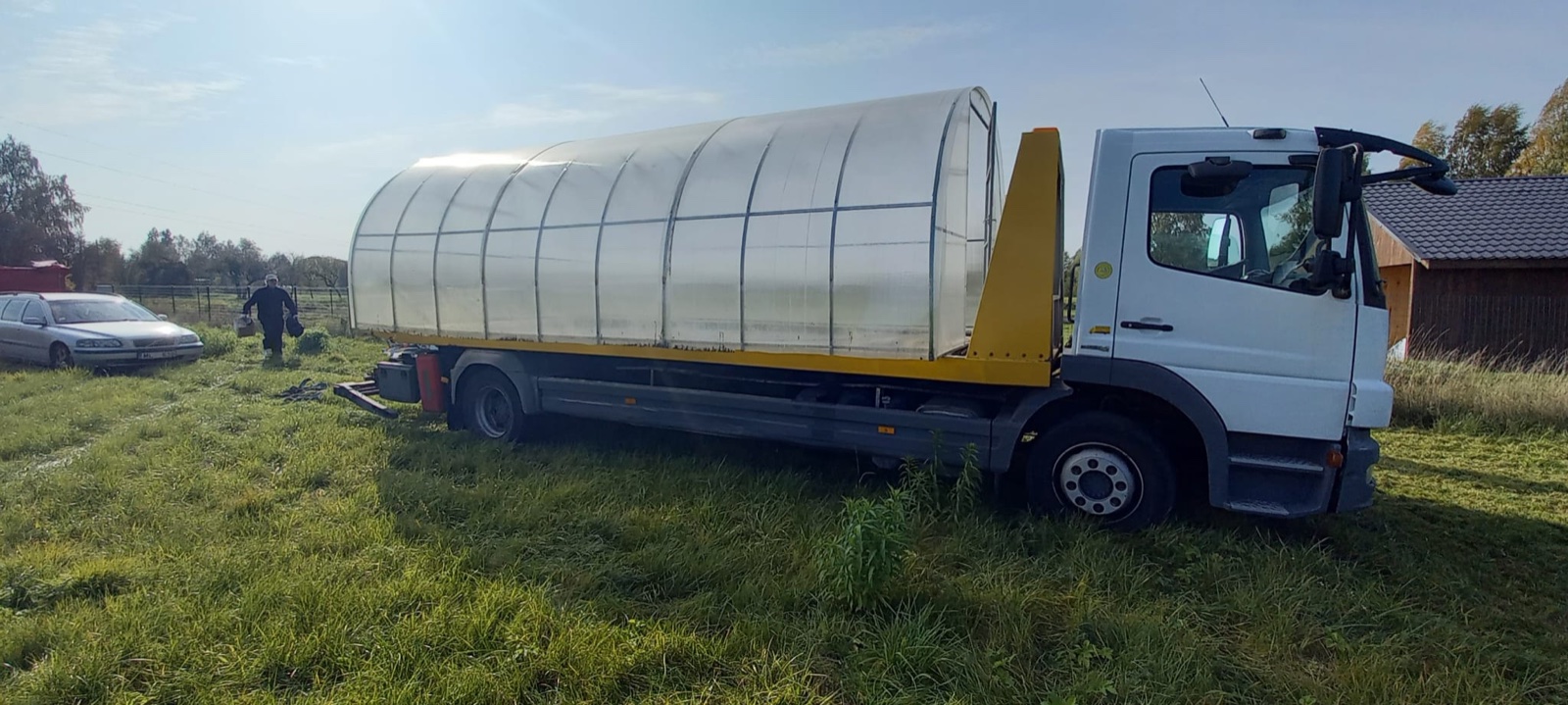
If your car is stuck in your driveway or on the roadside and shows no signs of life, do not risk straining your engine and battery. RS Pro Auto specialists can help transport your vehicle to a warm garage or workshop. Our transparent towing service prices allow you to plan your expenses—towing within Riga starts from 40-50 EUR, which is significantly cheaper than buying a new high-pressure pump or battery.
How to avoid this problem in the future?
Experienced drivers know that the best way to fight the frost is preparation. First, change the fuel filter every autumn, regardless of mileage. Filters accumulate microscopic amounts of water that turn into ice crystals in winter and accelerate the formation of paraffin clogs. Second, never drive with a nearly empty tank—a larger volume of fuel cools down slower, and less condensation forms within it.
Third, if the forecast predicts temperatures below -20°C, consider adding anti-gel when the temperature is still -5°C, while the fuel is still clear. This will prevent paraffin molecules from clumping together to form large crystals. Remember, the health of your diesel engine in winter depends directly on fuel quality and battery power. If trouble does strike, the RS Pro Auto team is just one phone call away to help with both starting and transport.