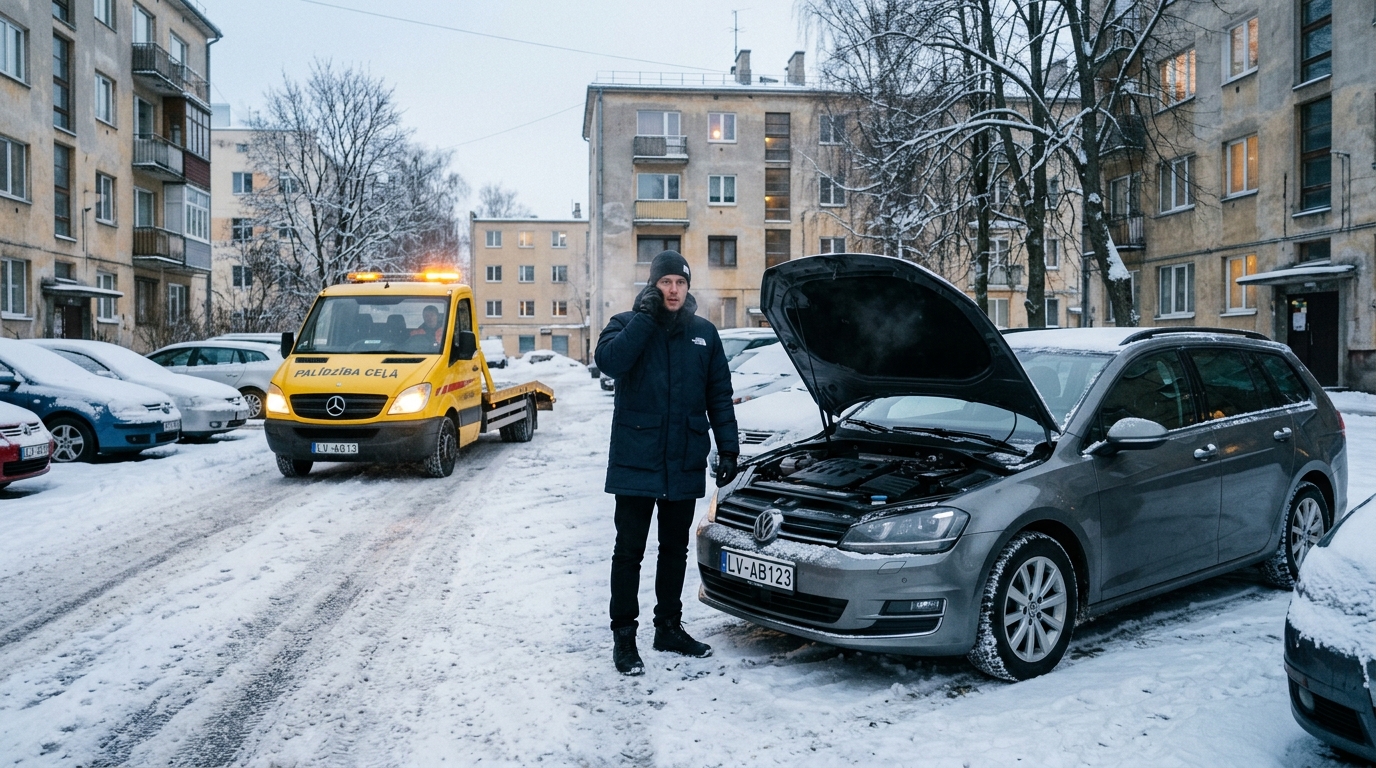
It is 07:30 on a freezing winter morning with temperatures at -16°C. You get into your car, turn the key or push the "Engine Start" button, and... all you hear is a faint clicking noise from the starter relay while the dashboard lights flicker and die. The battery is drained, and you urgently need to get to work or drop your kids off at school.
This is the most common winter emergency in residential courtyards. Here is an actionable step-by-step checklist from roadside professionals and a critical warning on what you must never attempt.
4 Steps When Your Car Won't Crank in the Cold
- Turn off all electrical accessories: Before attempting another start, make sure heated seats, rear defrosters, blowers, headlights, and infotainment units are completely turned off. This relieves the frozen battery of a 30-50 amp initial burden.
- Allow the battery a 30-second rest between attempts: Never crank the starter continuously for more than 5-7 seconds. Chemical reactions slow drastically in sub-zero temperatures. Resting for 30-40 seconds allows electrolyte density to partially recover around the lead plates.
- Inspect terminal connections: Pop the hood and inspect the battery terminals. If a clamp is loose or encrusted with white/blue corrosion, electrical contact is compromised. Wiggling and retightening the clamp can sometimes restore sufficient contact.
- If the starter only clicks, stop immediately: Rapid clicking indicates terminal voltage has dropped below 10V. Forcing repeated starts can weld solenoid contacts or warp battery plates permanently.
Why Automatic Vehicles Must Never Be Tow-Started (Bump-Started)
A well-meaning neighbor might offer: "Hook on the tow rope, let's bump-start it!". While this might occasionally work on manual transmissions (despite timing chain slip risks), if your vehicle has an automatic gearbox (torque converter, dual-clutch DSG, or CVT), attempting a tow start will catastrophically destroy your transmission, resulting in a €1,500-€3,000 repair bill:
- The automatic transmission fluid pump is powered strictly by the running engine.
- When the engine is dead, transmission hydraulic pressure is zero.
- Towing the car in gear forces internal clutches, planetary gears, and bearings to spin completely dry without lubrication or cooling, causing immediate friction burnout.
Do not let a flat battery ruin your schedule. Contact our dispatch team for immediate assistance. RS Pro roadside assistance in Riga patrols all neighborhoods with commercial booster equipment, arriving within 15-25 minutes to get you back on the road safely.
Car Won't Start in the Courtyard? We Arrive in 15-25 Mins!
24/7 on-site battery booster starting in Riga and surrounding areas. Safe for electronics, rates from €40.