Imagine the scene: you are driving your regular route, perhaps through busy city streets or along the highway, and as you approach a junction, you press the brake pedal. But instead of the usual resistance, your foot sinks all the way to the floor with zero effort. The car continues to roll, your speed doesn’t drop, and your heart begins to race. This is one of the most terrifying scenarios a driver can experience, and spring is the season when these incidents occur most frequently.
Why spring? The answer lies in the unique way we maintain our roads. During winter, road salt and de-icing chemicals, mixed with slush, penetrate every nook and cranny of your car’s undercarriage. When spring humidity sets in and temperatures hover around freezing, corrosion accelerates rapidly. The most vulnerable components are the metal brake lines, which gradually rust over time. At that critical moment when you need maximum pressure, the weakest point fails and bursts, causing an immediate loss of brake fluid and a total loss of pressure.
Why does the brake pedal sink to the floor?
Modern cars are equipped with a hydraulic braking system. When you press the pedal, the master cylinder creates pressure, which is transferred through lines and hoses to the wheel calipers or wheel cylinders. If a metal line is rusted and develops even a microscopic crack, the system loses its hermetic seal. Because liquid is incompressible, but air is—or because the fluid simply leaks out—the pressure is no longer transferred to the brake pads.
Most vehicles have a dual-circuit system, meaning that even if one line bursts, you should theoretically retain minimal braking ability on two wheels (diagonally). However, in reality, the pedal feel becomes so soft and ineffective that it naturally triggers panic in the driver.
Action Plan: How to stop if your brakes fail
If you find yourself in a situation where the brakes are unresponsive, the most important thing is to stay calm. You have only a few seconds to make the right decisions. Here are the steps you must take:
- Attempt to “pump” the brakes: Rapidly and repeatedly press the brake pedal. If the leak isn’t total or if there is air in the system, repeated pumping can generate enough pressure for the car to start slowly losing speed.
- Engine braking: This is one of the most effective methods. If you have a manual transmission, downshift through the gears sequentially (from 5th to 4th, then 3rd, etc.), releasing the clutch each time. The resistance of the engine will significantly reduce your wheel speed. If you have an automatic transmission, switch to manual mode (+/- or M) and do the same.
- Using the handbrake (parking brake): If your car has a classic handbrake lever, pull it slowly and gradually. Do not jerk it! Pulling the handbrake sharply will lock the rear wheels, which can cause the car to skid and spin out of control. Keep the release button pressed so you can instantly release the lever if you feel the car starting to slide.
- Electronic parking brake: If your car has an (P) button, don’t be afraid to use it. Most modern systems, when the button is held down while driving, activate an emergency braking mode through the ABS block, which stops the car safely and in a controlled manner.
Choosing a safe stopping spot and maneuvers
While you are fighting to reduce your speed, look for a safe place to pull off the road. Turn on your hazard lights to warn other road users. If you are on the highway, try to move toward the shoulder or grass—the grass and soft ground will provide additional resistance and help you stop.
In extreme situations, if there is an obstacle ahead and your speed remains high, you can use “friction braking” against a guardrail or curb by steering the car at an angle toward it. This will damage the bodywork and rims, but it could save your life.
What you should never do:
- Never turn off the engine while driving: This will cut off the power steering, making the wheel extremely heavy, and there is a risk that the steering wheel could lock, preventing you from maneuvering.
- Do not shift an automatic transmission into “P” (Park): This will simply break the transmission’s locking pin and will not stop the car.
Once the car has stopped: What’s next?
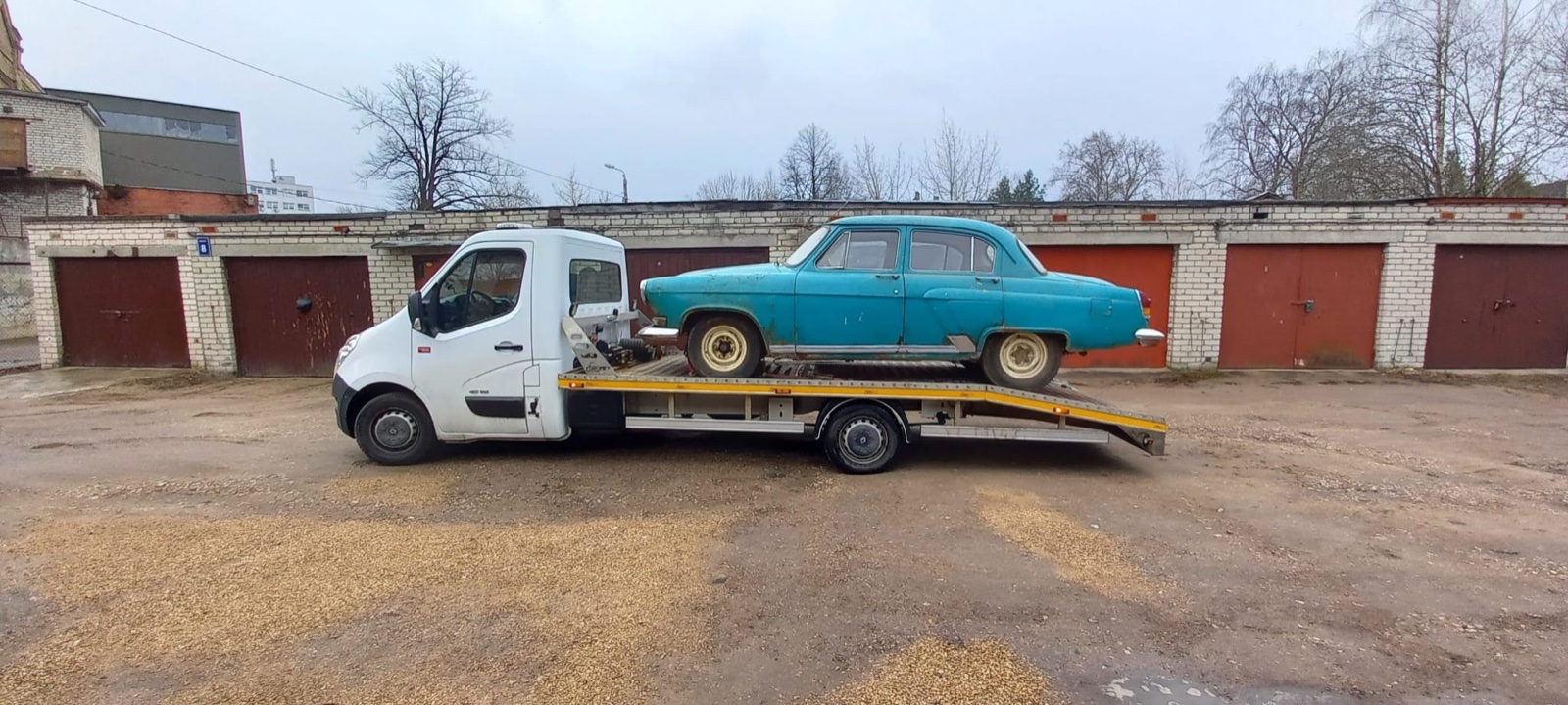
Once you have successfully stopped, do not attempt to continue driving, even if it feels like the brakes have “come back.” A brake system failure is a critical defect. At this point, you need professional help. RS Auto specialists are ready to respond at any time of day. Looking at our towing service prices, you will see that recovery within Riga costs only 40-50 EUR—a tiny sum compared to the risk of attempting to drive with broken brakes.
Our team will not only take your vehicle to the service center but can also recommend the best specialists who specialize specifically in replacing brake lines. Often, after one line bursts, it is highly recommended to replace all metal lines with copper analogs, which do not corrode and last much longer.
Prevention: How to avoid this scenario?
The best way to deal with brake failure is to prevent it from happening. Here are some tips from the RS Auto experts:
- Regular visual inspection: Every time the car is on a lift (e.g., for an oil change), ask your mechanic to check the condition of the brake lines. If surface rust or “swollen” sections are visible, they must be replaced immediately.
- Brake fluid change: Brake fluid is hygroscopic—it absorbs moisture. Over time, moisture in the fluid begins to corrode the system from the inside. Change it at least every two years.
- Spring wash: After the winter season ends, be sure to wash the car’s undercarriage to remove the accumulated layer of road salt.
Remember, the brake system is your primary safety guarantee on the road. If you feel any changes in the pedal’s performance—it has become softer, has a longer travel, or there are strange noises—do not wait until the last minute. Safety is not an area to cut corners. If an incident has occurred, RS Auto is just one phone call away to provide professional, fast assistance in any situation.