A hot summer day, city center traffic, or a bridge during rush hour. Traffic is crawling at a snail’s pace, the air conditioning is blasting, and suddenly you notice the coolant temperature gauge on your dashboard rapidly approaching the red zone. Moments later, a bright red warning light glows, and suspicious white steam begins to billow from under the hood.
Engine overheating is one of the most dangerous emergencies a driver can face. Within minutes, the temperature can exceed 120–130°C. If the wrong actions are taken at this moment, engine repairs can cost anywhere from 1,500 to several thousand euros—think a warped cylinder head, a blown gasket, or even a completely seized engine.
In this article, we will take a detailed look at the 5 biggest mistakes drivers make when their engine overheats, how to act correctly and safely, and when driving any further is strictly prohibited.
Early Signs of Engine Overheating: Spotting It in Time
The sooner you notice the problem, the less likely you are to cause irreversible damage to your engine. Pay attention to these signs:
- Temperature gauge exceeding 90–100°C: For most internal combustion engines, the optimal operating temperature is between 85°C and 95°C. If the gauge approaches 110°C or enters the red zone, the cooling system is not coping with the load.
- Sweet, pungent smell in the cabin: The steam from overheated antifreeze (ethylene glycol) has a very distinct, slightly sweet odor. If you smell this through the vents, there is likely a leak in the system.
- Loss of power and engine “knocking”: As cylinder walls overheat, the fuel mixture may ignite prematurely, causing the engine to lose power and start jerking or rattling.
- Steam from under the hood: This is the final warning sign—the coolant in the system has boiled, and the pressure valve is releasing steam.
5 Most Dangerous Mistakes Drivers Make When Overheating
1. MISTAKE: Opening the coolant reservoir (radiator) cap
This is not just a technical error; it is a direct threat to your health and life! The cooling system operates under high pressure (approximately 1.2–1.5 bar). At this pressure, the boiling point of the liquid is above 115°C. As soon as you unscrew the cap, the pressure drops instantly, and the boiling antifreeze erupts like a geyser. The result: severe second and third-degree thermal burns to the face, arms, and chest. Never open the cap until the engine has cooled down completely for at least 30–45 minutes!
2. MISTAKE: Adding cold water or antifreeze to a hot engine
The laws of physics are unforgiving. The engine block and cylinder head are heated to 120°C+. If you pour cold liquid (+15°C) into such scorching metal, you cause a massive thermal shock. The metal contracts unevenly, instantly causing micro-cracks in the cylinder head or permanent warping. Such a part cannot be repaired; it must be replaced entirely.
3. MISTAKE: Trying to drive “just a few more kilometers home”
Many hope that “the airflow will cool the radiator” and keep driving. However, if there is no coolant in the system (it has leaked out through a burst hose or radiator), airflow will not help. Without liquid, pistons expand so much that the oil film breaks down, causing them to rub against the cylinder walls until the engine seizes. This is a fatal blow to your engine.
4. MISTAKE: Turning off an overheating engine immediately
If steam isn’t pouring out yet and the coolant hasn’t fully leaked, shutting down the engine immediately stops the water pump. Circulation ceases, but the block remains hot, creating a local “heat pocket” in the cylinder head. The correct tactic: pull over, put the car in neutral (“N”), turn off the A/C, and set the heater to maximum heat and maximum fan speed. The interior heater core acts as an additional radiator and can pull excess heat from the engine in seconds. Only after the temperature drops slightly should you turn off the engine.
5. MISTAKE: Refilling the system with tap water or mineral water
In an emergency, plain water can serve as a temporary fix to reach a service center. However, tap water contains minerals and limescale that form deposits at 100°C in the radiator’s delicate fins and the thermostat. Use only distilled water or appropriate antifreeze.
Step-by-Step: Correct Action Plan for Overheating
- Turn off the A/C: The air conditioning compressor puts immense extra load on the engine, and the condenser sits right in front of the radiator, blowing hot air directly onto it.
- Turn on the heater to MAX: Set the temperature to the highest setting (HI) and the fan to full power. Yes, it will get very hot inside (open the windows!), but it will dump a massive amount of heat from the engine block.
- Pull over to the side of the road or a parking lot immediately: Switch on your hazard lights, park in a safe place, and exit the vehicle carefully.
- Open the hood (carefully!): Release the hood catch. If steam is coming out, wait until the flow subsides before fully opening the hood to let in fresh air.
- Check the radiator fan: If the engine is running but the electric fan is not spinning, a blown fuse, relay, or the fan motor itself could be to blame.
- Check for leaks: If green, red, or blue liquid is pouring out from under the car, driving is strictly forbidden.
When Should You Stop Driving and Call a Tow Truck?
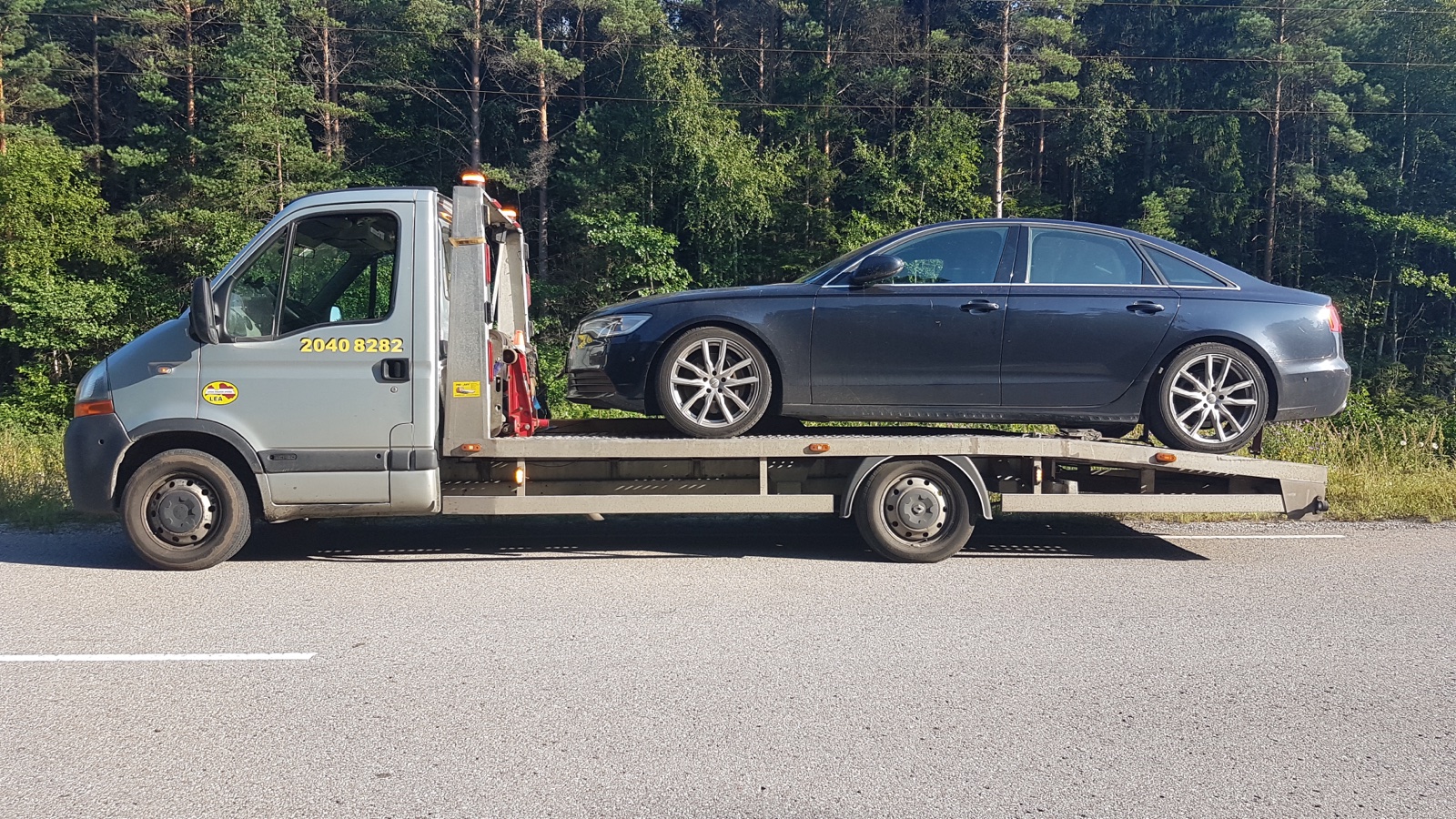
If you have identified a coolant leak (cracked radiator, burst hose, or leaking water pump), attempting to drive will result in a complete engine overhaul. In this situation, the only rational and cost-effective decision is roadside assistance and towing to a trusted service center.
RS Pro Service ensures a tow truck arrives within 15–20 minutes across Riga and the surrounding region. Our operators will carefully load your car onto a hydraulic platform without causing further stress to your engine or transmission. All rates are transparent and fixed according to our price list.
If you have broken down on a busy road or bridge in Riga, call our 24/7 dispatcher: 24/7 Auto towing in Riga and beyond – our phone line +371 28989070 is open 24/7/365!