Picture the scene: it’s a sunny Saturday afternoon, and you’re heading home after a successful fishing trip or transporting materials for your new patio. Suddenly, you notice a thin, bluish wisp of smoke rising from your trailer wheel in the side mirror. At first, you might dismiss it as dust, but seconds later, the smoke thickens, accompanied by the sharp, acrid smell of burning grease. You have become a victim of one of the most common trailer technical failures: a wheel hub bearing seizure.
At RS Pro Auto, we deal with the consequences of neglected trailer running gear daily. In this article, we look at why trailer bearings fail prematurely, how to spot the warning signs before a wheel locks up or snaps off, and what steps to take if you find yourself stranded on the roadside.
Why boat trailers are at high risk
While cargo trailers often suffer from overloading, boat trailers are in the highest risk category. The reason is simple: physics. When you drive a long distance to the lake or the coast, trailer hubs and bearings heat up to 60-80°C. The moment you back the trailer into the water to launch the boat, a rapid cooling process begins.
This thermal shock creates a vacuum inside the hub. If the seals aren’t in perfect condition, the hub literally sucks in surrounding water. If it’s saltwater, the corrosion process starts immediately. Even fresh water mixing with bearing grease creates an emulsion that loses its lubricating properties. On your next trip, the bearing runs without proper lubrication, dry friction occurs, and temperatures skyrocket.
Mirror control: How to spot trouble while driving
A seasoned driver doesn’t just watch the road ahead; they regularly monitor the situation in their mirrors. You can spot a trailer bearing defect in the early stages if you know what to look for:
- Bluish smoke: This is the clearest warning sign. Smoke appears when bearing grease begins to boil and burn. If you see smoke on only one side, the issue is confirmed.
- Wheel vibration or ‘wobble’: If the bearing has disintegrated, the wheel begins to move on the axle. In your mirror, this may look like a slight vibration or a ‘wobble,’ regardless of road surface quality.
- Sparks: If you reach the final stage where metal is grinding against metal, you might see sparks in your mirror at dusk. At this point, the wheel shearing off is only seconds away.
The ‘Touch Test’
We recommend a simple habit: at every stop (e.g., at a petrol station), walk to the trailer and place your hand near the wheel hub (the center of the disc). Caution: do this carefully! If the hub is too hot to touch, the bearing must be replaced immediately. Under normal conditions, the hub should only be slightly warm.
When a bearing seizes: Consequences and solutions
If a bearing fails completely, there are two common scenarios. First, the wheel locks up. This ruins the tire in just a few hundred meters and can cause the trailer to fishtail. Second—and more dangerous—is when the bearing heat damages the axle thread, causing the wheel and the entire hub to roll off the axle. Your trailer then becomes an uncontrolled projectile on the road.
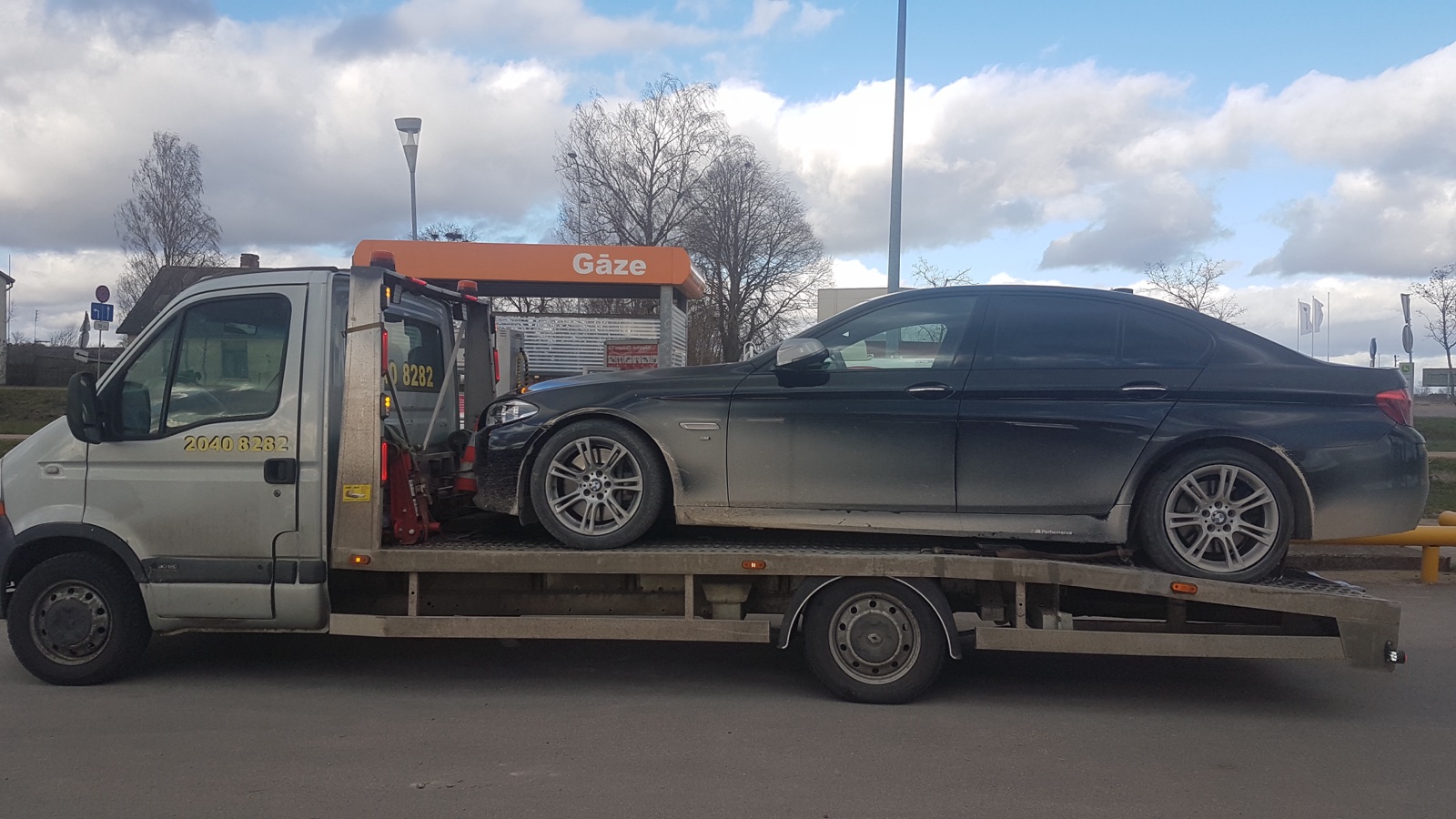
If you feel your trailer behaving strangely, slow down immediately and pull over to a safe location. If the wheel is already smoking, do not attempt to ‘limp home.’ It will end in a costly axle replacement or even a fire. In such cases, professional trailer and heavy cargo transport is the only sensible solution to prevent total equipment loss.
Prevention: How to avoid bearing ‘death’
Prevention is always cheaper than a motorway repair. Here are some technical tips from the RS Pro Auto experts:
- Use waterproof grease: Standard lithium grease is not suitable for boat trailers. Look for ‘Marine’ grade grease that does not wash away and maintains its properties in contact with water.
- Bearing Buddies: Install spring-loaded covers on your hubs to maintain constant positive pressure. This prevents water from entering even during rapid cooling.
- Wait before submerging: If time permits, wait 10-15 minutes after arriving at the water to let the hubs cool down naturally.
- Regular maintenance: Check for bearing play at least once a season. Jack up the trailer and spin the wheel—it should rotate quietly without any binding.
How much does roadside assistance cost?
Many drivers try to continue their journey with a faulty bearing, fearing high recovery costs. However, a detached wheel often damages the brake system and axles, increasing repair costs fivefold. Our breakdown recovery services are priced to be accessible, with local recovery starting from 40-50 EUR. If you need on-site help with a tire or running gear issue, mobile service is available starting from 40 EUR.
Why choose RS Pro Auto?
We understand that trailer recovery is not the same as transporting a passenger car. It requires specialized equipment to secure the trailer safely, especially if it is missing a wheel. Our team is equipped with specialized dollies and jacks that allow us to load even a trailer with a completely seized or missing wheel onto our platform without damaging its structure.
In conclusion, remember: your trailer is an extension of your vehicle. Its technical condition directly impacts your safety and that of other road users. Check your bearings regularly, never ignore smoke in your mirrors, and if in doubt, leave the transport to the professionals. Road safety is not the place to cut corners.