The summer heat, the wind in your hair, and the pure sense of freedom that comes with driving a convertible is one of life’s greatest motoring pleasures. However, the unpredictable weather can often spring nasty surprises. Imagine the scene: the skies above suddenly darken, the first heavy drops of rain begin to fall, you press the roof-close button, but nothing happens. The mechanism jerks and halts halfway, leaving your car interior completely exposed to the incoming downpour. This is the moment where panic won’t help, but technical knowledge certainly will.
Why do convertible roofs get stuck?
Modern convertible roof mechanisms are complex engineering feats involving a delicate interplay of hydraulics, electric motors, and dozens of sensors (microswitches). Most failures occur due to a lack of synchronization between these components. If a single sensor fails to send a signal confirming that the trunk lid is locked or that a roof section has reached a specific angle, the control unit will halt the entire process for safety reasons.
Common causes include:
- Hydraulic fluid leaks: If a hose has cracked, pressure is lost, and the roof can no longer lift its own weight.
- Sensor failure: Dirt, corrosion, or mechanical damage may cause the car to “think” there is an obstacle in the way.
- Low battery voltage: Operating the roof with the engine off can quickly drain the battery to the point where the motors lack the power to complete the cycle.
- Mechanical deformation: Even a minor impact to the bodywork can alter the geometry of the roof frame, creating friction that the electric motor cannot overcome.
Emergency First Aid: How to close the roof manually?
Almost every convertible—whether it’s a BMW, Mercedes-Benz, Audi, or Volvo—has a manufacturer-provided emergency procedure for manual roof closure. This information is typically found in your owner’s manual, but in a crisis, it isn’t always at hand.
1. Locate the emergency valve or screw: Most cars with hydraulic roofs have a special screw or lever in the trunk (usually near the pump unit, hidden under the trim). Turning this a half-turn releases hydraulic pressure, allowing you to move the roof by hand.
2. Use the emergency tool: Many German cars (such as the BMW 3 Series E46 or E93) include a long hex key in the tool kit. This is designed to manually engage the locking mechanisms at the windshield frame or rear shelf.
3. Work as a pair: A convertible roof construction is heavy and unwieldy. To lift it from a mid-position and prevent the frame from twisting, you should lift it simultaneously from both sides. If you are alone and a storm is approaching, the best choice is professional roadside assistance to get your vehicle to safety.
What if the roof is stuck at an “unnatural” angle?
Sometimes a roof gets stuck at a so-called “dead point” where the levers are fully extended and manual closure seems impossible without specific tools. In this situation, the biggest risk is rainwater entering the cabin. In modern convertibles, critical electronic control units are located under the seats and floor carpeting. If these get wet, the cost of repairs can quickly exceed the value of the car.
If you cannot close the roof yourself within 10–15 minutes, do not wait for the storm to start. Cover the open area with plastic sheeting or any waterproof material and call for specialists. The RS Pro team understands the urgency of such situations, which is why our towing service prices are transparent and accessible.
Why you need covered transport or extra caution
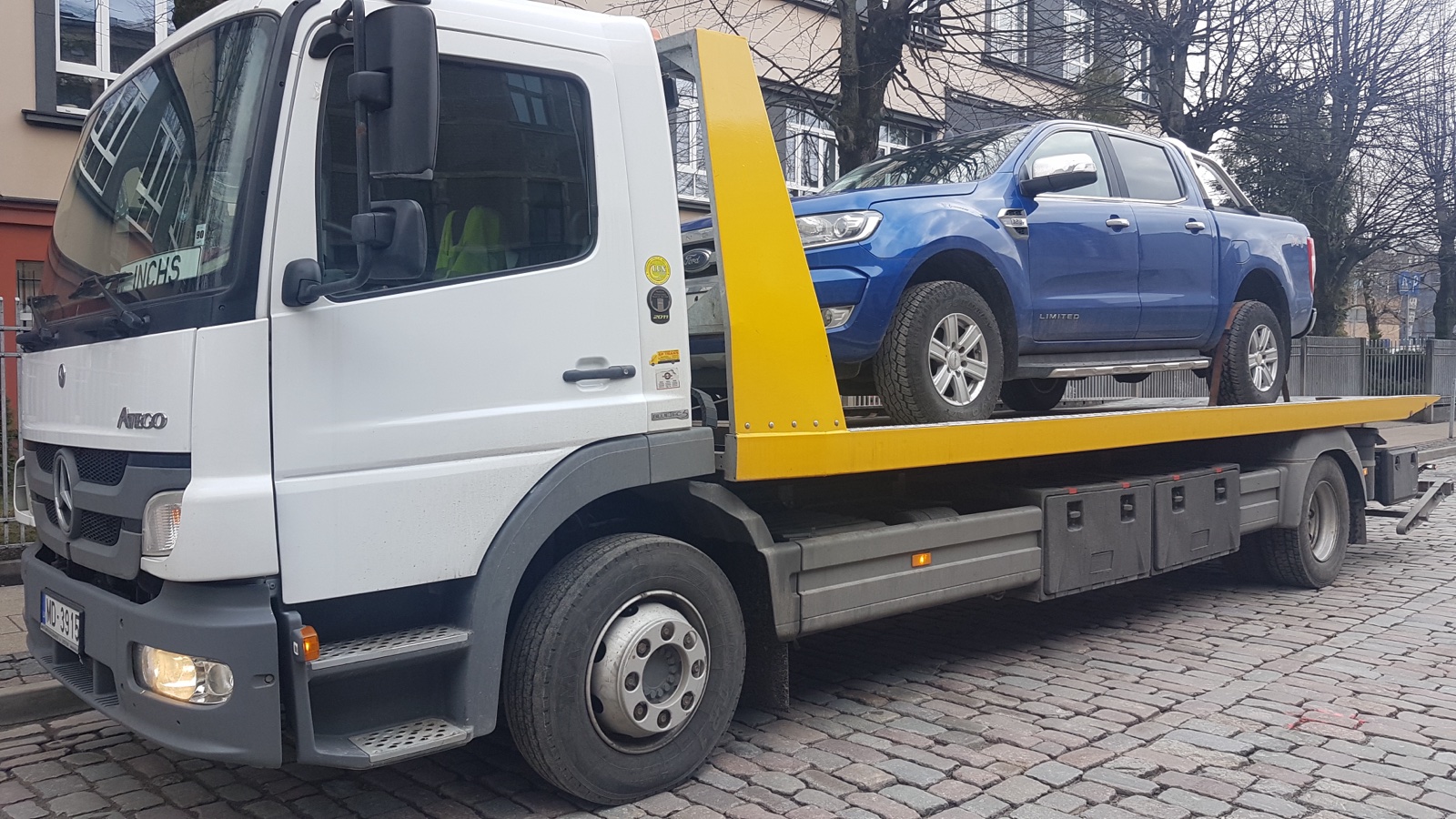
Transporting a convertible with a half-open roof is a challenge. The open structure creates massive aerodynamic drag during transport. If the car is hauled on an open tow truck facing into the wind, the airflow can literally rip the roof section off or permanently damage the hinges.
A professional towing service will take the following steps:
- Secure the roof sections with heavy-duty cargo straps to prevent vibration and movement.
- If possible, use a covered trailer or a specialized carrier to protect the interior from rain and wind during transport.
- Maintain an optimal speed to avoid placing extra load on the damaged mechanism.
Remember, improper transport can cause more damage than the initial fault. If you need assistance in other situations, such as a flat tire, RS Pro also offers mobile tire service.
Prevention: How to avoid a “stuck roof” scenario?
For your convertible to serve you well, it requires specific maintenance that is often overlooked at standard service centers:
- Lubricate the seals: All rubber roof seals should be treated with a special silicone or Krytox lubricant at least twice a season. This prevents the seals from sticking, which is a common reason why the motor “won’t pull” during the initial phase.
- Clean the drains: If the drain tubes are clogged, water accumulates in the roof compartment and can flood the hydraulic pump or electronics.
- Lubricate the mechanism: Moving joints should be cleaned and lubricated with dry Teflon lubricant so they don’t attract dust, which acts as an abrasive.
- Hydraulic fluid: It is recommended to change the hydraulic fluid every 5 years, as it attracts moisture over time, leading to internal corrosion of the system.
In conclusion, a convertible is a lifestyle that demands a little extra care. If the mechanics fail and a storm is just around the corner, remember that RS Pro is your trusted partner. We won’t just help with transport; we will provide guidance to ensure your car doesn’t suffer from the elements. Save our contacts to ensure your summer drives remain safe and carefree!