Picture the scene: it’s late evening, you’re driving along a quiet road, and suddenly you hear that distinctive, hollow thump, followed by a rhythmic vibration. A flat tyre. You pull over safely, pop the boot to retrieve your spare wheel, and that’s when the real headache begins. The spare is completely flat, your old jack has seized up, or—worse still—while trying to loosen the wheel, you realise the ‘locking nut’ has been rounded off or stripped.
These situations are a classic case of Murphy’s Law, catching out even the most prepared drivers. In this article, we, the experts at RS Pro Auto, will walk you through how to handle these critical moments, how to avoid costly mistakes, and when to recognise that DIY roadside repair is no longer an option.
Safety First: What to do immediately after stopping
Before you reach for your tools, your priority is the safety of you and your passengers. Basic road safety and common sense demand immediate action, especially at night or on busy roads.
- Switch on your hazard lights. This is the primary signal to other drivers that your vehicle is an obstruction.
- Put on your reflective vest. Keep it in the cabin, not buried under luggage in the boot.
- Deploy your warning triangle. Remember the distance: at least 15 metres behind your vehicle in built-up areas, and at least 100 metres on open roads.
- Pull as far away from the traffic as possible. If you can, stop on a firm, level surface.
Problem No. 1: A Flat Spare Tyre
Many drivers go years without checking the pressure in their spare. Consequently, when the moment comes, it’s unusable. If you don’t have a tyre inflator with you, the situation can seem hopeless. However, you do have options.
Modern vehicles often come with a repair kit instead of a spare—special sealant foam and a small compressor. If your car has this, use it, but remember that foam only works for small punctures. If the tyre is ripped against a kerb or pothole (a sidewall tear), the foam won’t help.
If your spare is flat and you lack a pump, calling for help is your only real choice. In these instances, 24/7 mobile tyre service is the best solution, as technicians will come to you with professional equipment to inflate your tyre or perform a repair right on the spot.
Problem No. 2: Stripped or Rounded Nut
This is one of the most technically challenging problems. Often, garage mechanics over-tighten wheel bolts with an impact wrench. When you try to remove them on the side of the road with a standard wrench, the soft metal of the bolt head (especially with locking nuts) can round off.
What not to do: Do not force the nut if you feel the wrench slipping. You will only damage the head further, making removal impossible even for a professional without specialist drilling equipment.
What to do: If the nut is only slightly damaged, you might try tapping on a slightly smaller socket (e.g., an 18mm socket on a 19mm nut), but this requires precision and a hammer, which isn’t always at hand. If that fails, stop. Our 24/7 mobile tyre service is equipped with specialised extractors that can remove damaged nuts without damaging your alloy wheels.
Problem No. 3: Broken or Faulty Jack
Factory-supplied jacks are often designed for emergency use only. They can fail under the car’s weight if the ground isn’t perfectly level or if the thread has rusted. If the jack starts to lean or bend, stop immediately!
Never put your hands or feet under a raised vehicle supported only by a jack. If the jack fails, do not try to lift the car with improvised tools (wooden blocks, rocks), as this is extremely dangerous. In such a situation, the safest course of action is to call technical assistance.
When to call a mobile service vs. a recovery truck?
Choosing between a mobile tyre service and a tow truck depends on the severity of the damage and your location.
Choose a mobile tyre service if:
- The tyre has a puncture that can be fixed on-site (a plug or patch).
- You have a spare but lack the tools or physical strength to change it.
- You have a stripped nut, but the wheel is intact.
- The tyre is just low on pressure and needs inflation and a leak check.
Service costs are budget-friendly—a mobile tyre service callout is a small price to pay for saved time and peace of mind.
Choose a recovery truck if:
- The rim is severely deformed or cracked after hitting a pothole.
- Multiple tyres are damaged simultaneously.
- You suspect suspension or brake system damage.
- The vehicle is in a dangerous spot where working on the roadside would put the technician at risk.
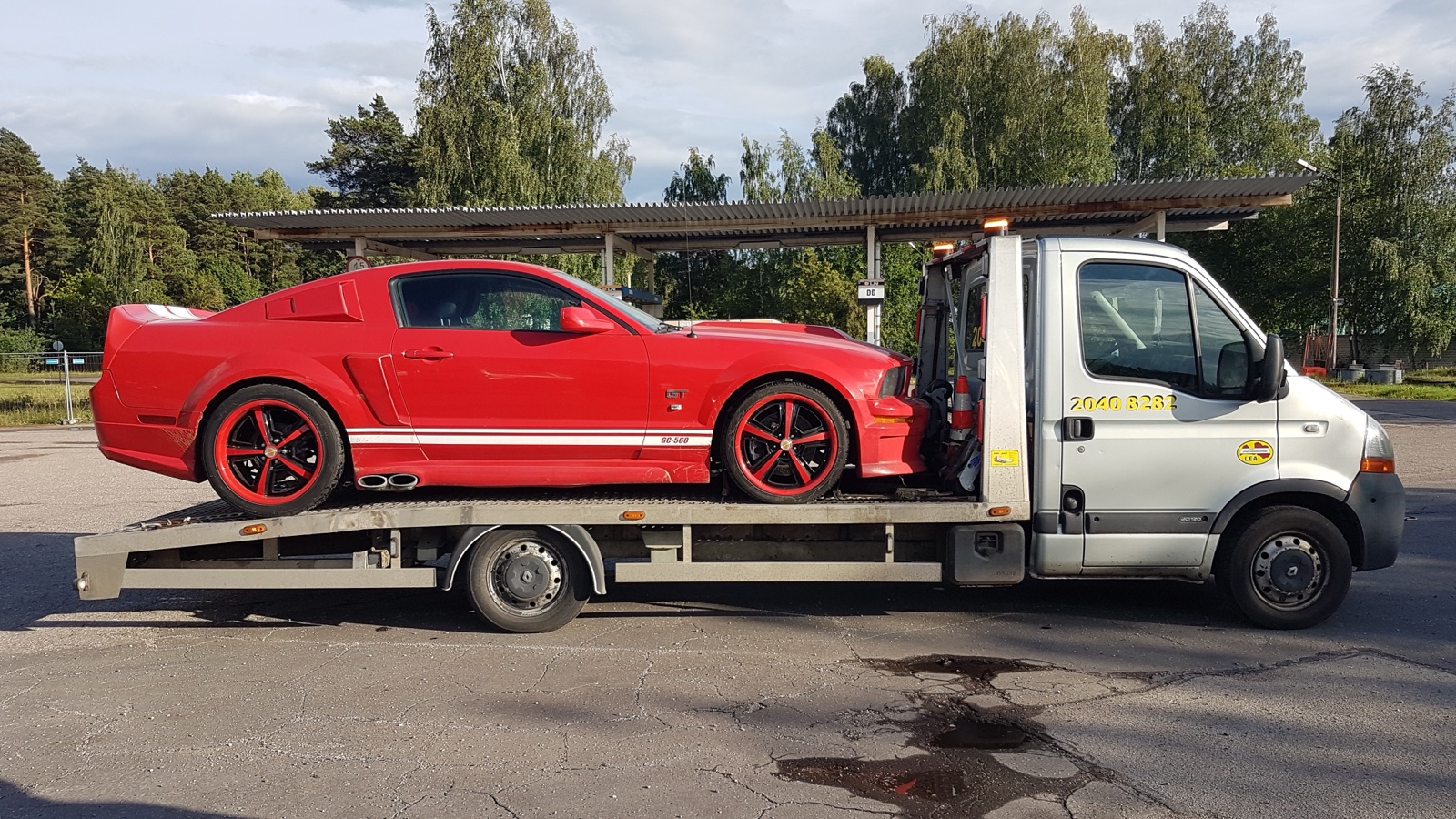
At RS Pro Auto, our recovery prices are competitive and transparent, available 24/7 to get you out of a tough spot.
Practical tips to avoid future trouble
As experienced auto experts, we recommend taking a few simple steps at least once a season to ensure these situations don’t become a nightmare:
- Check the air pressure in your spare! Set it slightly higher than your road tyres, as air naturally leaks over time.
- Lubricate your wheel bolts. Use copper or graphite grease to prevent them from seizing (oxidising).
- Check your ‘locking nut’ key. Ensure it isn’t worn down and is stored in a safe, easily accessible place.
- Buy a quality jack and wheel wrench. The factory kit is often inadequate; a longer wrench (with leverage) will make it much easier to loosen even tightly fastened bolts.
Remember, the most important thing on the road is to keep calm. Even if you have no tools and a flat spare, modern recovery options allow these problems to be solved quickly and professionally. The RS Pro Auto team is available 24/7 to help you get back on the road safely and without unnecessary hassle.